BSP has been appointed for the design and construction of a dewatered sludge storage system serving industrial site in Italy, within the framework of sludge treatment and energy recovery processes.
Wastewater treatment sludge is intended to be integrated into advanced processing lines, including thermal drying and energy recovery.
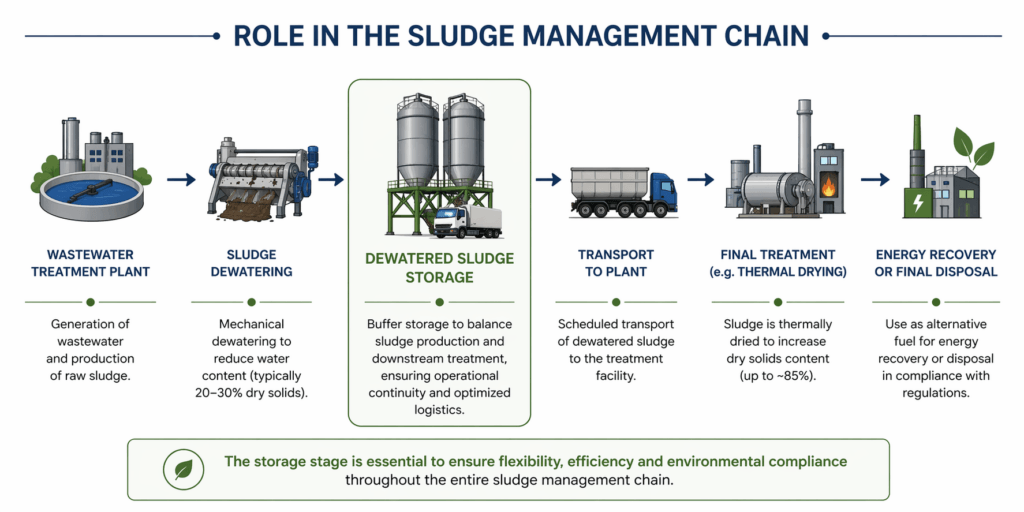
Dewatered sludge, typically characterized by a dry solids content ranging from 20% to 30%, requires an intermediate management phase between production and final treatment.
In this context, the storage system plays a strategic role as a buffer unit, ensuring operational continuity between sludge production and downstream treatment processes, regulating flow rates to the plant, and optimizing transportation and loading operations.
Technical Description of the System
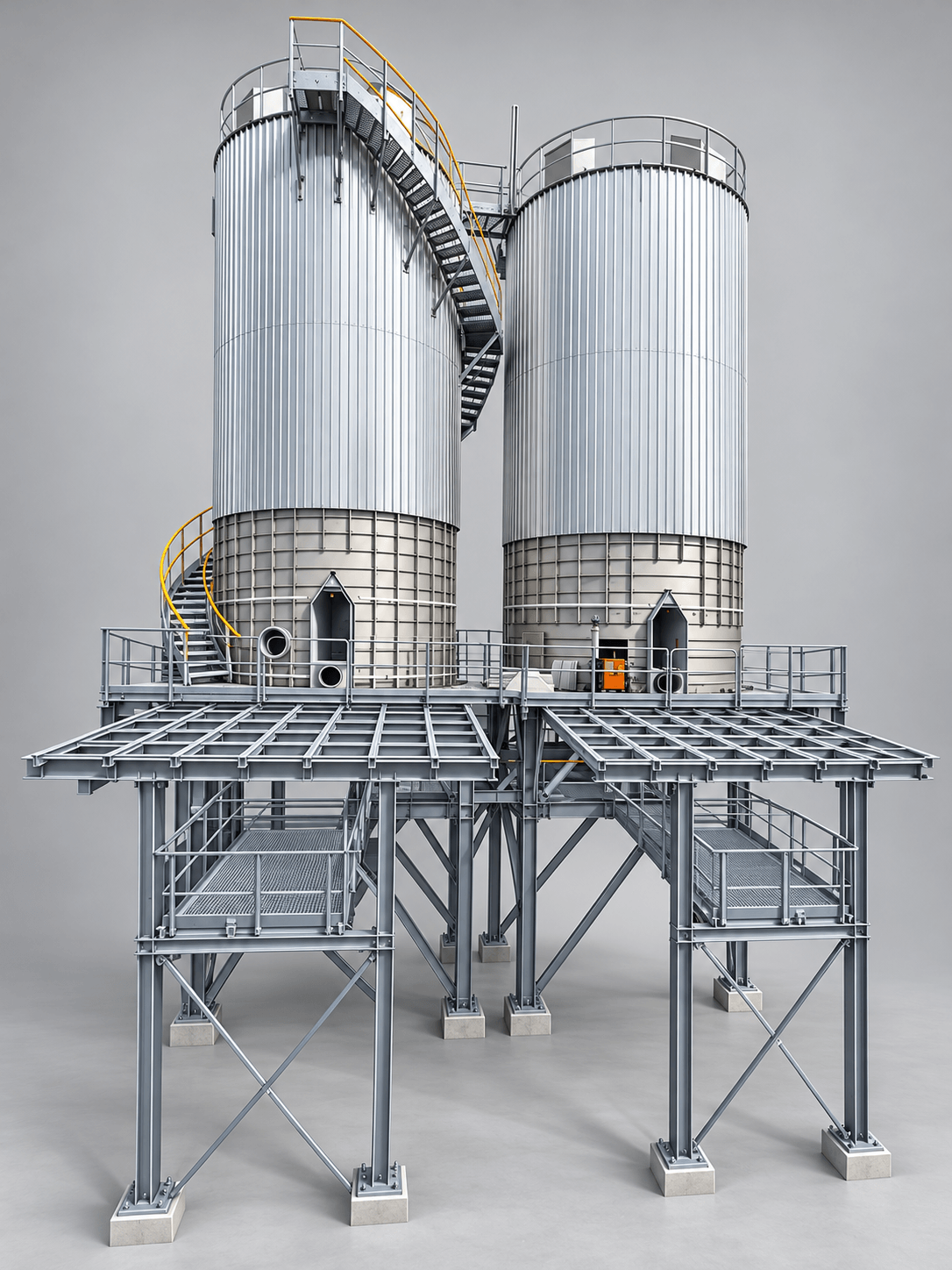
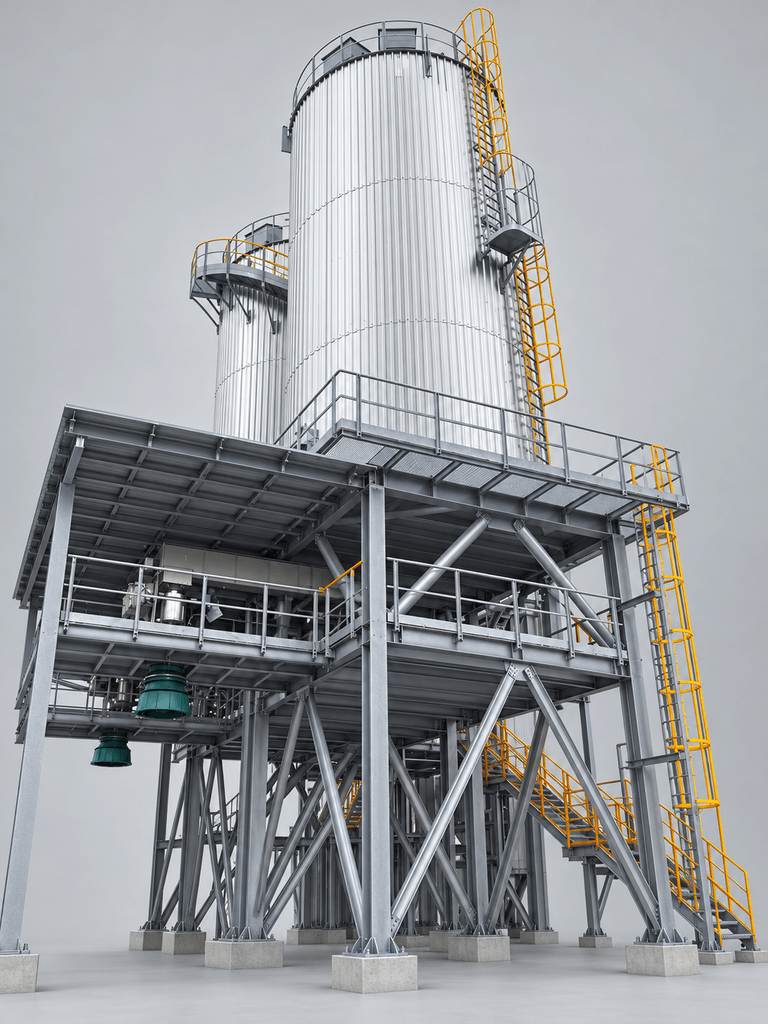
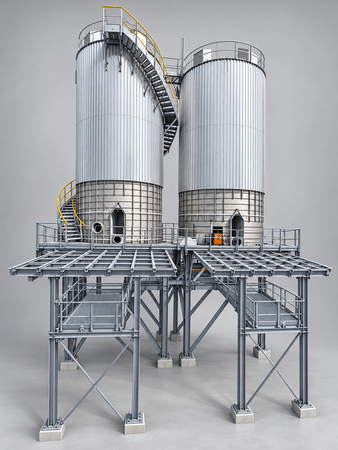
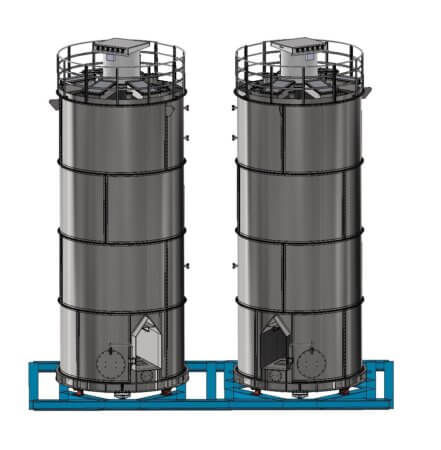
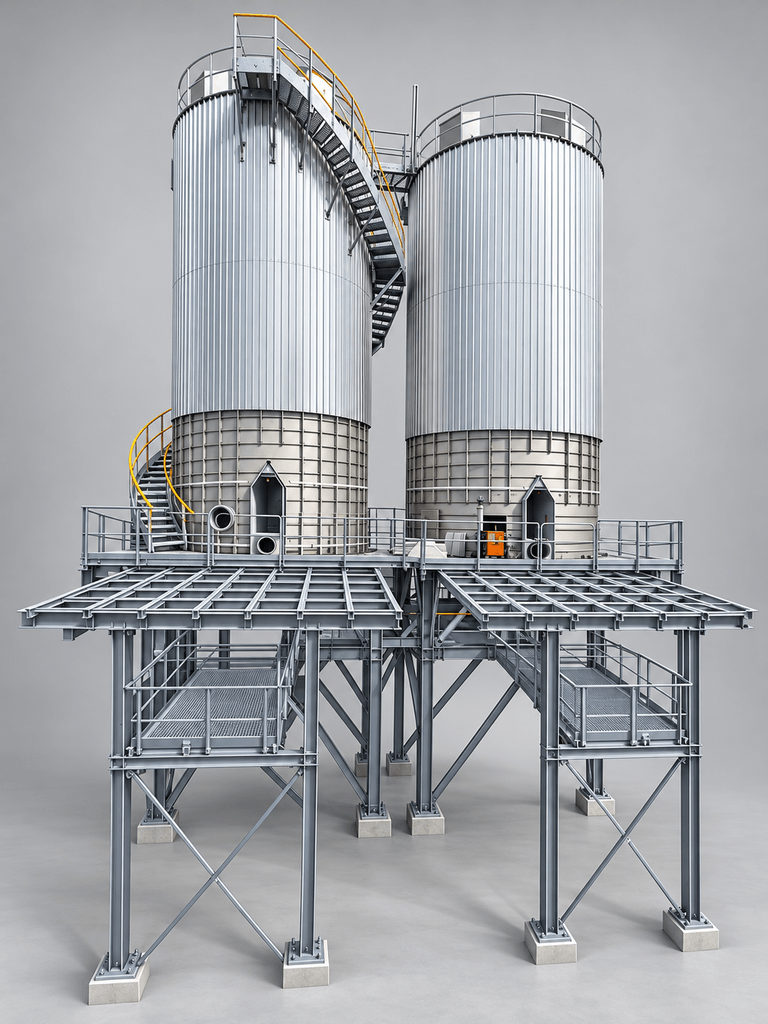
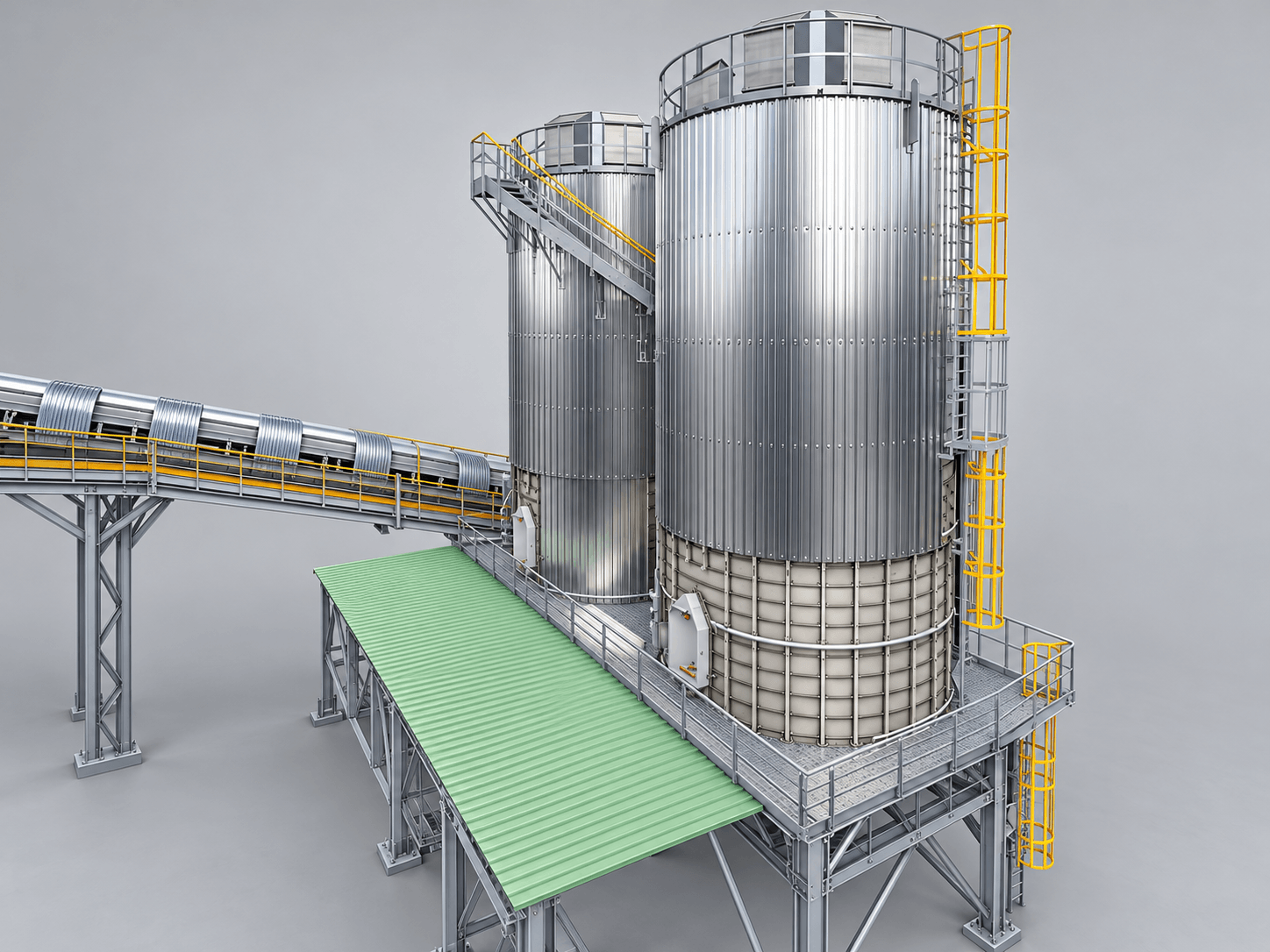
The project includes the supply of two vertical cylindrical silos, each with a net storage capacity of 300 m³, designed for handling dewatered, semi-solid sludge.
The silos will be manufactured in structural steel and equipped with planetary extraction systems, specifically suited for cohesive, low-flowability materials. This solution prevents bridging and compaction phenomena, ensuring consistent, controlled, and continuous discharge.
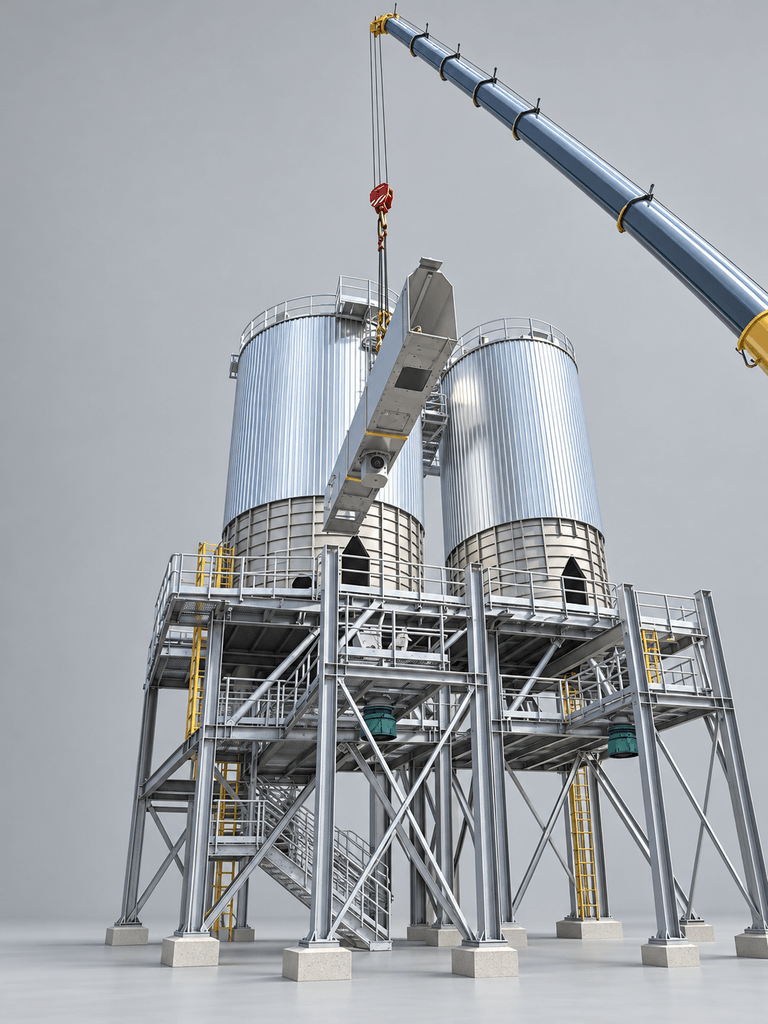
The system will be installed on an elevated steel structure, designed to allow direct truck loading. A dedicated loading area will be provided beneath the silos, where sludge will be transferred via extraction and conveying systems, optimizing logistics and reducing loading times.
The structure will include access platforms, stairways, safety handrails, and supporting frameworks, in compliance with applicable safety and maintenance regulations.
Function of Dewatered Sludge Storage
Dewatered sludge storage represents a key step in the wastewater treatment chain, enabling efficient handling of sludge exiting the dewatering process.
Specifically, the storage system allows to:
ensure proper monitoring and management of stored volumes.
compensate for discontinuities between sludge production and final disposal or recovery;
optimize logistics and truck loading operations;
reduce environmental impact through enclosed storage systems;
improve operational safety by minimizing manual handling;
To ensure that the product does not get damaged during the descent, a special lattice structure was designed consisting of cups coated with special wear-resistant materials arranged alternately one above the other. The structure will also support the enormous load of the filter and the accessory containers above the roof of the silo.
Compliance with Best Available Techniques (BAT)
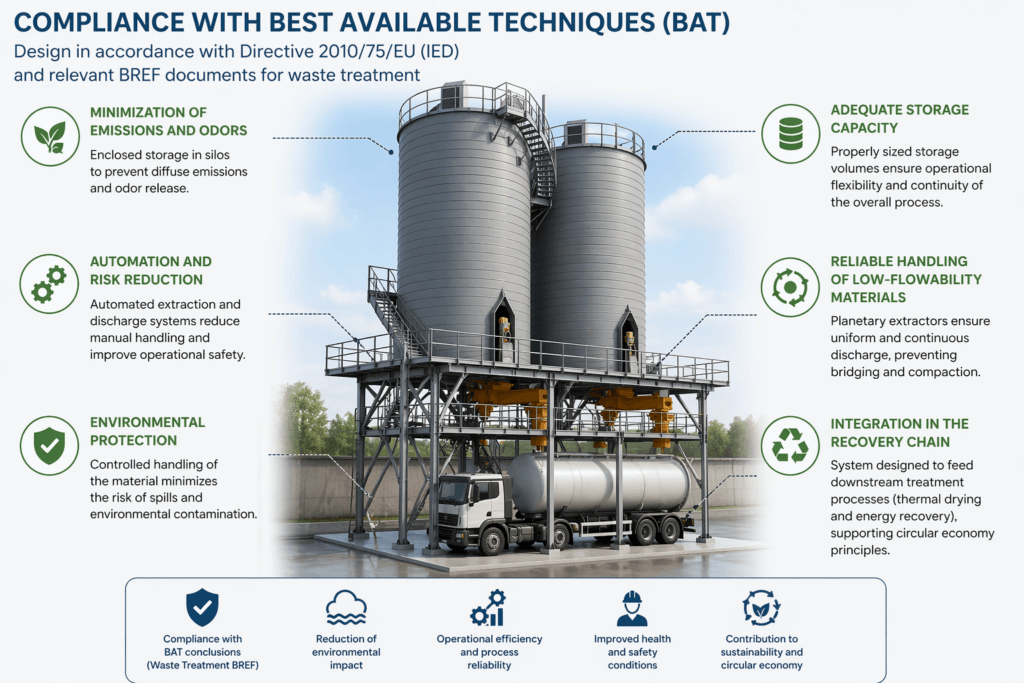
The system design has been developed in accordance with the principles of Best Available Techniques (BAT) as defined by Directive 2010/75/EU (Industrial Emissions Directive – IED) and relevant BREF documents for waste treatment.
The main design features are aligned with BAT requirements, including:
integration into the recovery chain, in line with circular economy principles.
use of enclosed storage systems (silos) to minimize diffuse emissions and odor impact;
automation of extraction and discharge operations to reduce operational risks;
proper sizing of storage capacity to ensure operational flexibility and continuity;
use of planetary extractors to ensure reliable handling of low-flowability materials;
3D VIEWS